
What Is DTF Printing? A Modern Solution for Custom Apparel
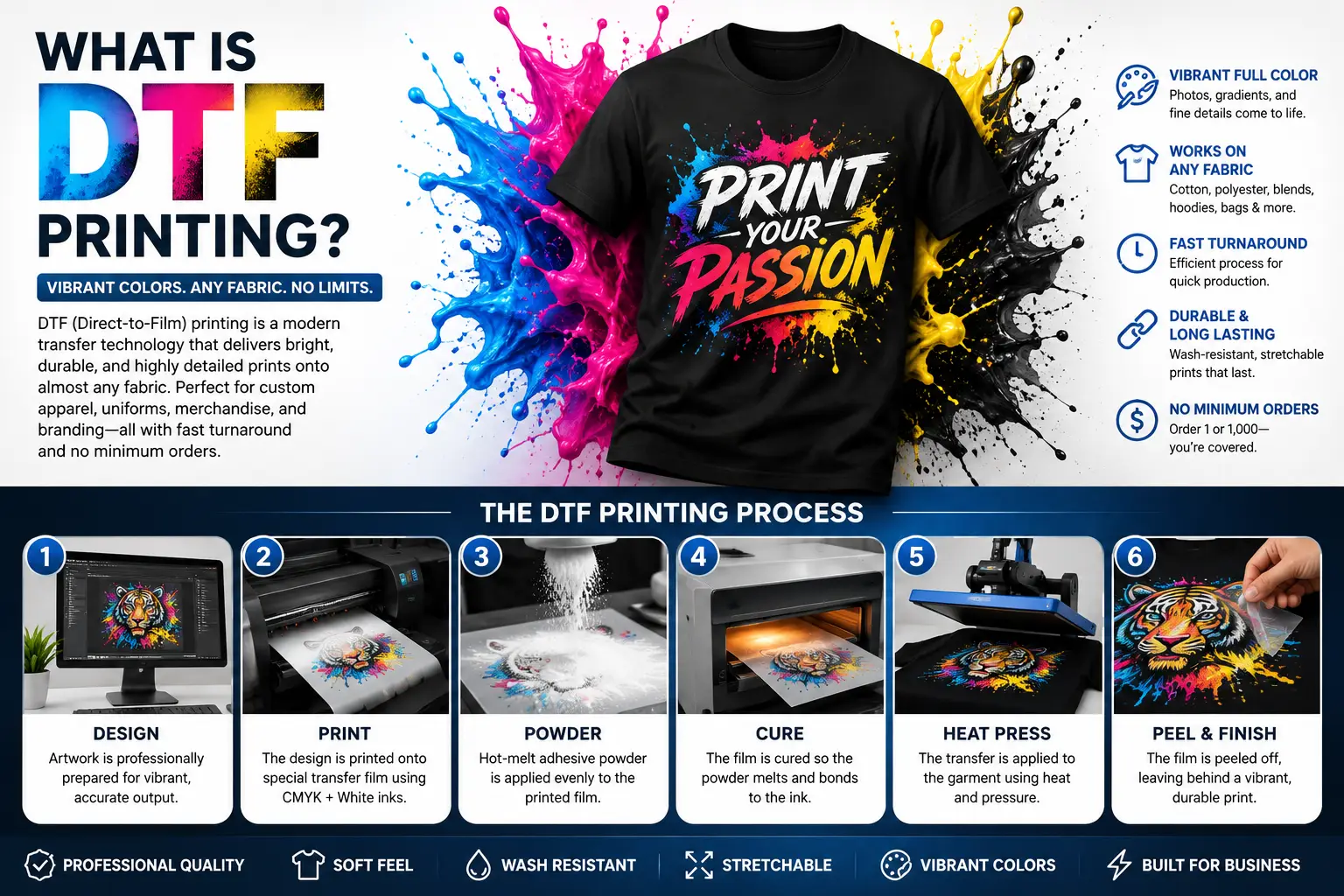
Direct-to-Film (DTF) printing is one of the fastest-growing technologies in the custom apparel industry. Unlike traditional printing methods that may require complex setup processes, DTF printing allows vibrant full-color artwork to be transferred directly onto garments with exceptional detail and durability. From small business brands to large-scale commercial production, DTF has become a preferred solution for companies looking for flexibility, quality, and fast turnaround times.
DTF printing works by first printing a design onto a special transfer film using professional CMYK and white inks. After printing, a hot-melt adhesive powder is applied to the film and cured using controlled heat. The finished transfer can then be pressed onto a wide range of materials, including cotton, polyester, blends, hoodies, tote bags, uniforms, and more. This process creates a soft yet durable print that maintains strong color vibrancy over time.
One of the biggest advantages of DTF technology is its versatility. Traditional screen printing often requires separate setup work for every color and design variation, making small runs expensive and time-consuming. DTF printing eliminates many of those limitations by allowing high-quality full-color prints without minimum order restrictions. Whether a customer needs one shirt or hundreds of garments, DTF provides a scalable commercial printing solution.
The commercial DTF process begins with artwork preparation. High-resolution graphics are professionally optimized to ensure accurate color output, sharp edges, and proper transparency handling. Once the design is prepared, industrial DTF printers apply layers of cyan, magenta, yellow, black, and white inks onto PET transfer film. Precision color management is critical during this stage to produce vibrant and consistent results across every print run.
After printing, adhesive powder is evenly applied across the transfer film. The film then passes through a curing stage where the powder melts and bonds to the printed ink. This adhesive layer is what allows the design to permanently attach to fabric during heat pressing. Professional commercial setups carefully control temperature, curing time, and humidity to ensure long-lasting durability and wash resistance.
The final stage is heat pressing the transfer onto the garment. Using commercial heat presses, the cured transfer is applied under high pressure and precise temperature settings. Once pressed and cooled, the film is peeled away, leaving behind a vibrant finished print with excellent stretch, detail retention, and durability. Many professional DTF shops also perform a secondary finishing press to improve softness and overall print feel.
DTF printing has become especially popular for clothing brands, promotional apparel, company uniforms, sports teams, event merchandise, and online apparel businesses. The ability to produce highly detailed graphics, gradients, photographs, and specialty effects makes DTF an ideal choice for modern apparel decoration. It also supports faster production timelines compared to many traditional methods, helping businesses fulfill orders efficiently while maintaining professional quality.
At a commercial production level, quality control plays a major role in the success of DTF printing. Professional shops use calibrated printers, premium inks, controlled curing systems, and commercial-grade heat presses to maintain consistency across every order. Proper workflow management ensures that each transfer is durable, vibrant, and ready for real-world wear. As the custom apparel industry continues evolving, DTF printing remains one of the most efficient and versatile technologies available for modern garment decoration.