
Screen Printing vs DTF Printing: Which Is Better for Custom Apparel?
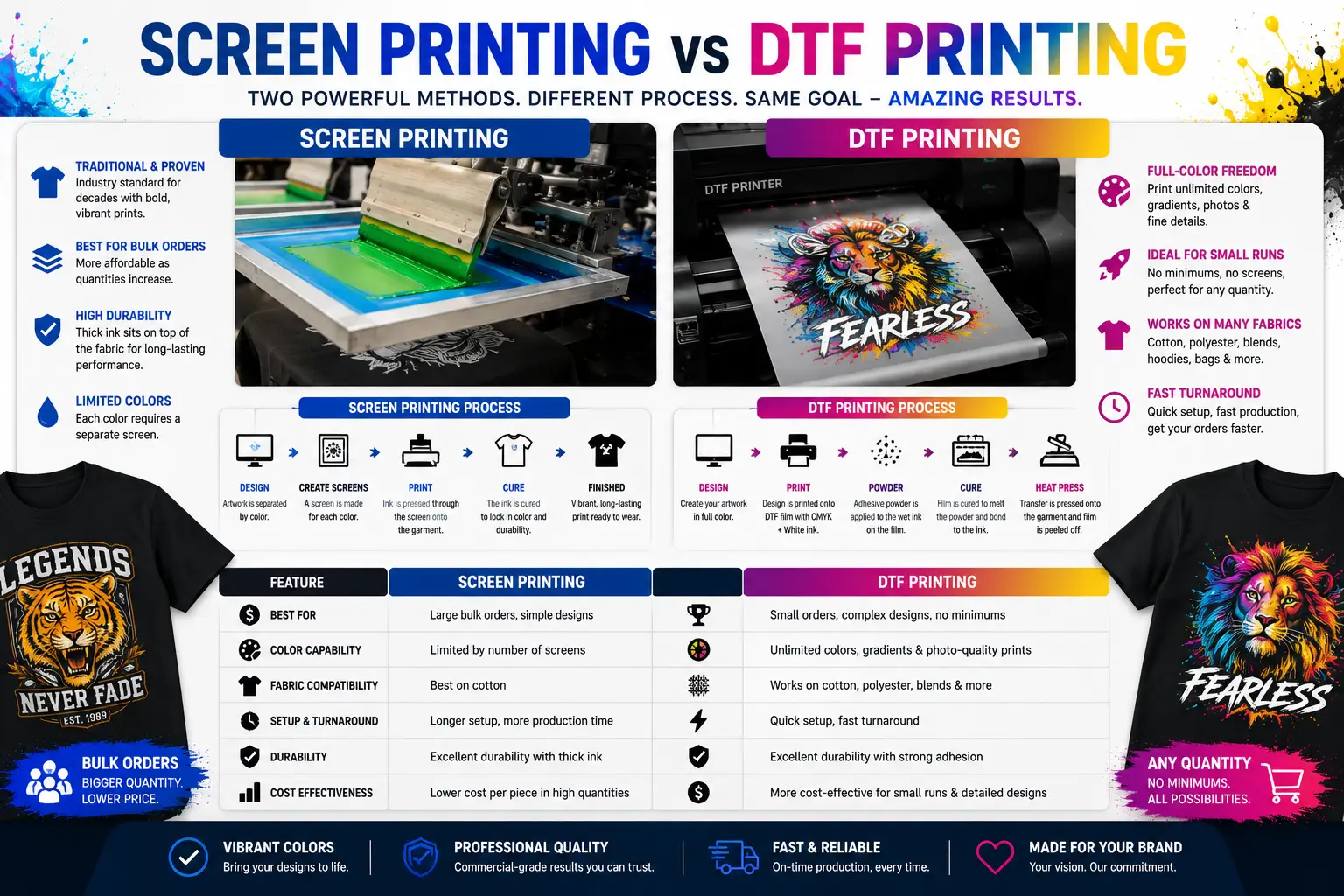
Custom apparel printing has evolved significantly over the years, and two of the most popular methods today are traditional screen printing and modern DTF (Direct-to-Film) printing. While both methods are widely used in the apparel industry, they serve different production needs and offer unique advantages depending on the project. Understanding the differences between screen printing and DTF printing can help businesses, clothing brands, and organizations choose the right solution for their apparel orders.
Screen printing has been a staple in commercial apparel decoration for decades. The process uses mesh screens to apply layers of ink directly onto garments, with each color requiring its own separate screen. This method is known for producing bold, durable prints and is especially efficient for large bulk orders with simple designs. Many large apparel brands and event companies still rely heavily on screen printing for high-volume production because the cost per shirt becomes very affordable once setup is complete.
However, screen printing also comes with several limitations. Because every color requires a separate screen setup, multi-color designs can become expensive and time-consuming to produce. Setup fees, film separation, screen preparation, and cleanup all contribute to higher upfront production costs. For small runs or highly detailed artwork, screen printing may not always be the most efficient option. This is especially true for businesses that frequently change designs or need fast turnaround times.
DTF printing offers a newer and far more flexible approach to garment decoration. Instead of creating screens, DTF printers print full-color artwork directly onto a special transfer film using CMYK and white inks. Adhesive powder is then applied and cured before the transfer is heat-pressed onto apparel. This process allows highly detailed, vibrant, full-color prints to be produced quickly without the complex setup required in traditional screen printing.
One of the biggest advantages of DTF printing is its ability to handle small orders efficiently. Unlike screen printing, DTF does not require separate screens for each color, making it ideal for one-off prints, small businesses, startup clothing brands, and custom personalized apparel. Complex artwork, gradients, photographs, and multi-color graphics can all be printed without significantly increasing setup costs or production complexity.
DTF printing also provides greater material flexibility. While screen printing performs best on certain garment types, DTF transfers work well on cotton, polyester, blends, hoodies, tote bags, performance wear, and many other materials. This versatility has made DTF increasingly popular among commercial print shops looking to offer broader product options while maintaining fast production speeds and vibrant print quality.
When comparing durability, both methods can produce long-lasting results when done professionally. Screen printing is traditionally known for excellent durability on bulk apparel production, especially with plastisol inks. Modern DTF technology, however, has improved significantly and now offers strong wash resistance, flexibility, and color retention when high-quality inks, adhesive powders, and proper curing methods are used. Professional commercial DTF production can deliver results that meet the demands of everyday wear and business-level apparel production.
Turnaround time is another major factor businesses consider. Screen printing often requires longer setup times, especially for multi-color jobs. DTF printing streamlines much of the process by eliminating screen preparation and reducing setup requirements. This allows commercial DTF shops to process orders faster, making DTF an excellent option for rush jobs, same-day production, online apparel fulfillment, and fast-paced commercial environments.
Ultimately, the best printing method depends on the project goals. Screen printing remains an excellent choice for very large-volume orders with simple designs and limited colors. DTF printing, on the other hand, excels in flexibility, speed, vibrant full-color detail, smaller production runs, and modern on-demand apparel workflows. As the apparel industry continues evolving, many commercial print shops now use both technologies together to provide customers with the best solution for every type of order.